Mapping cost, control and resilience across the fuel supply chain
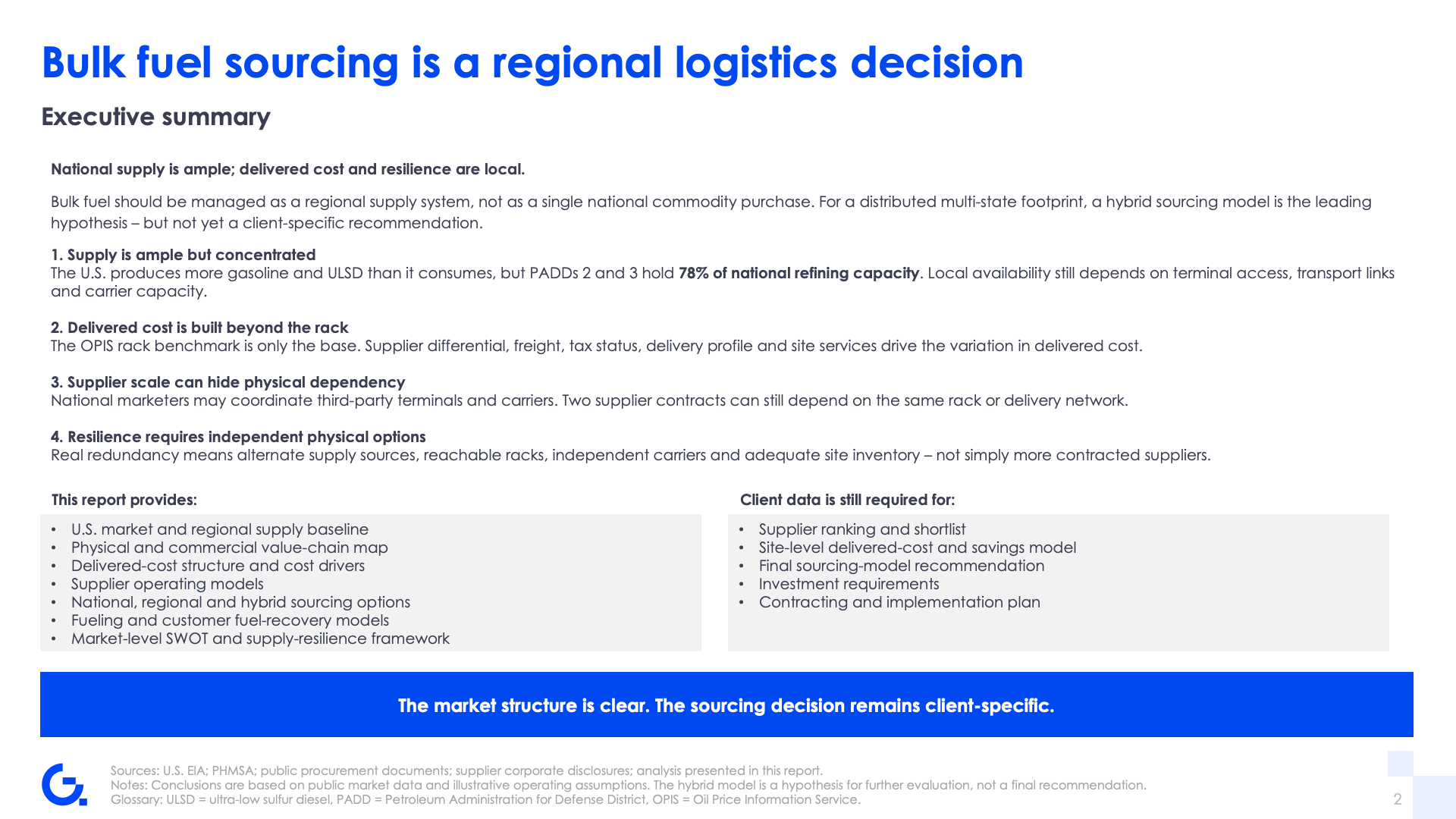
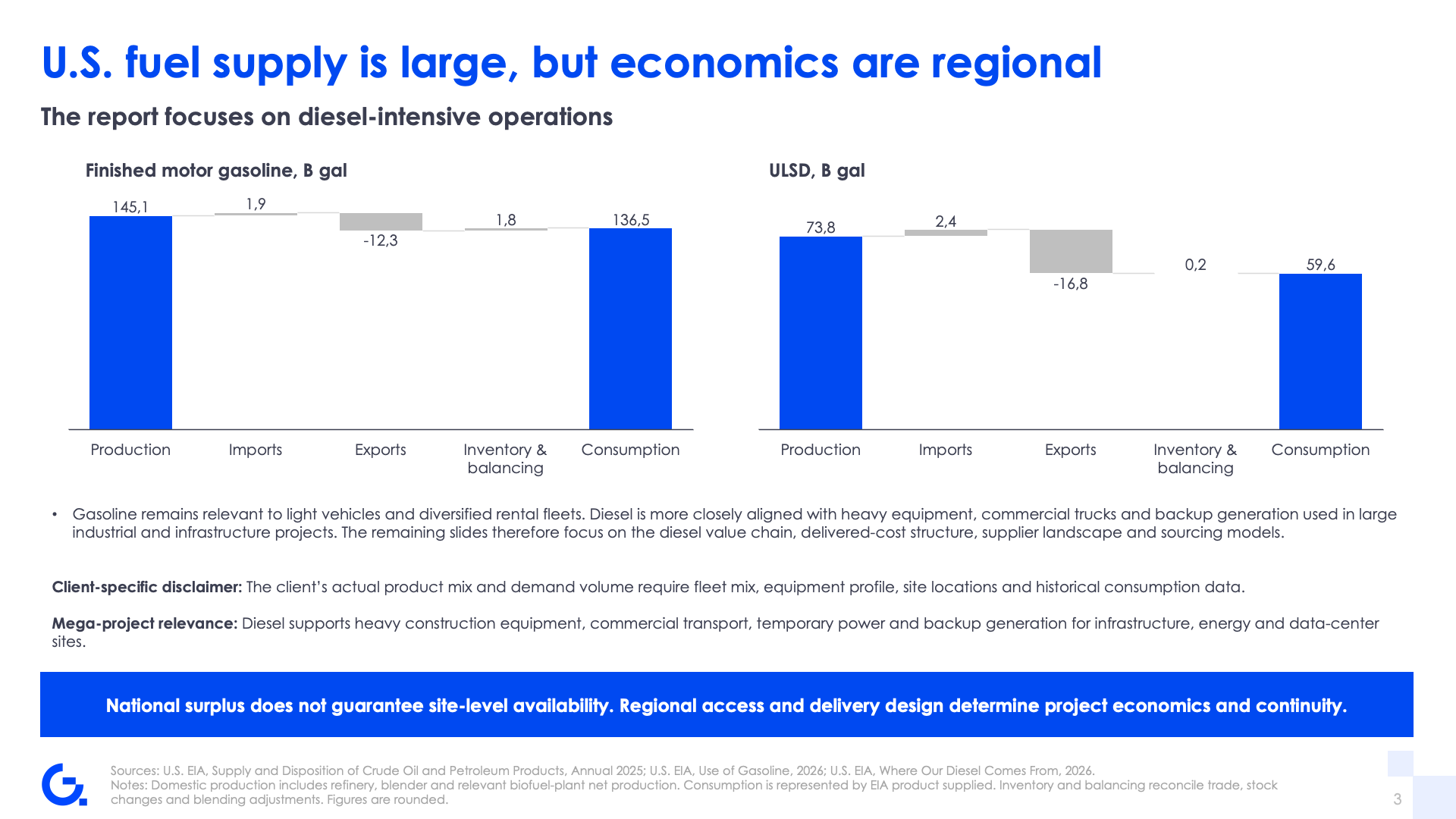
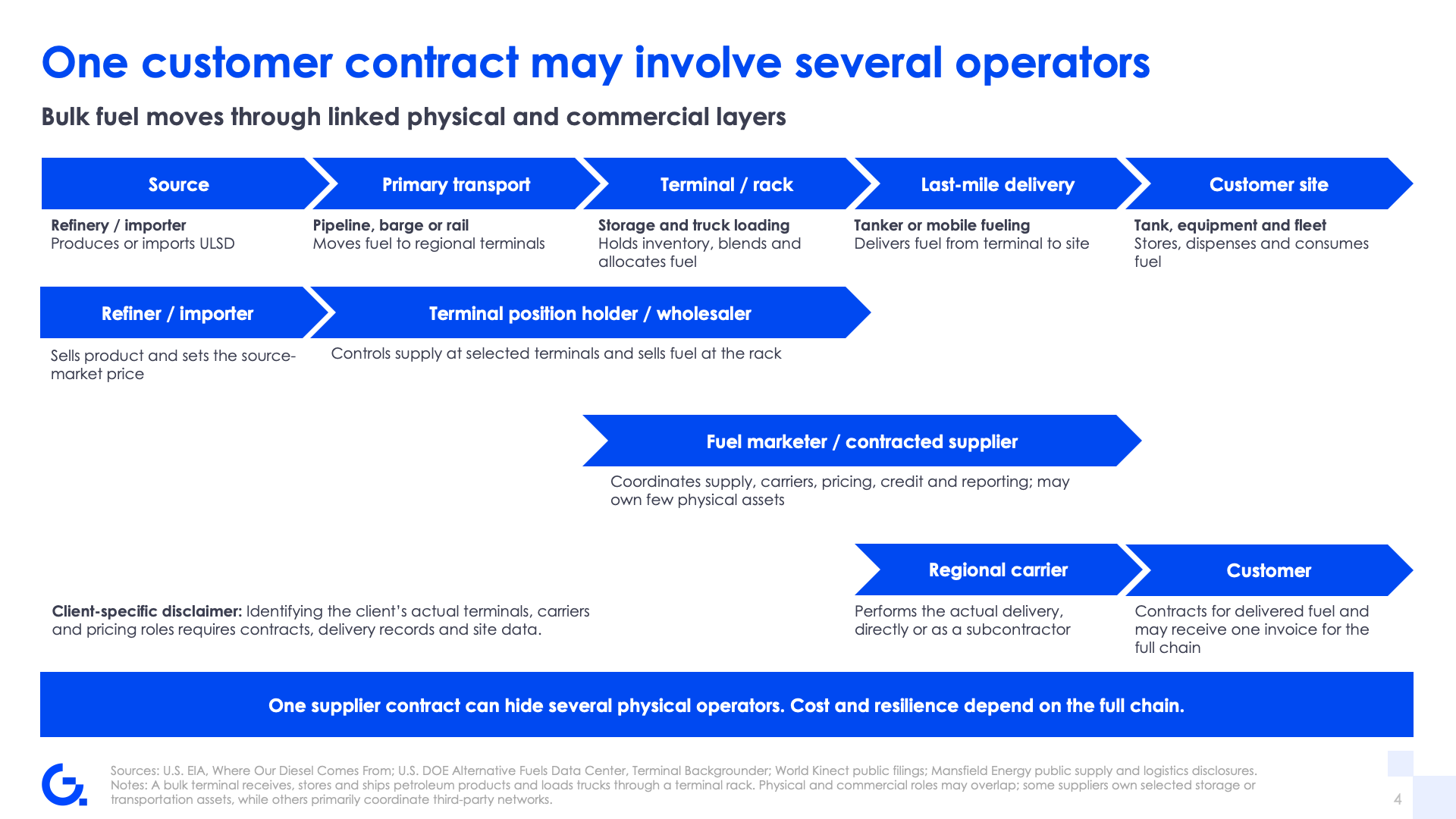
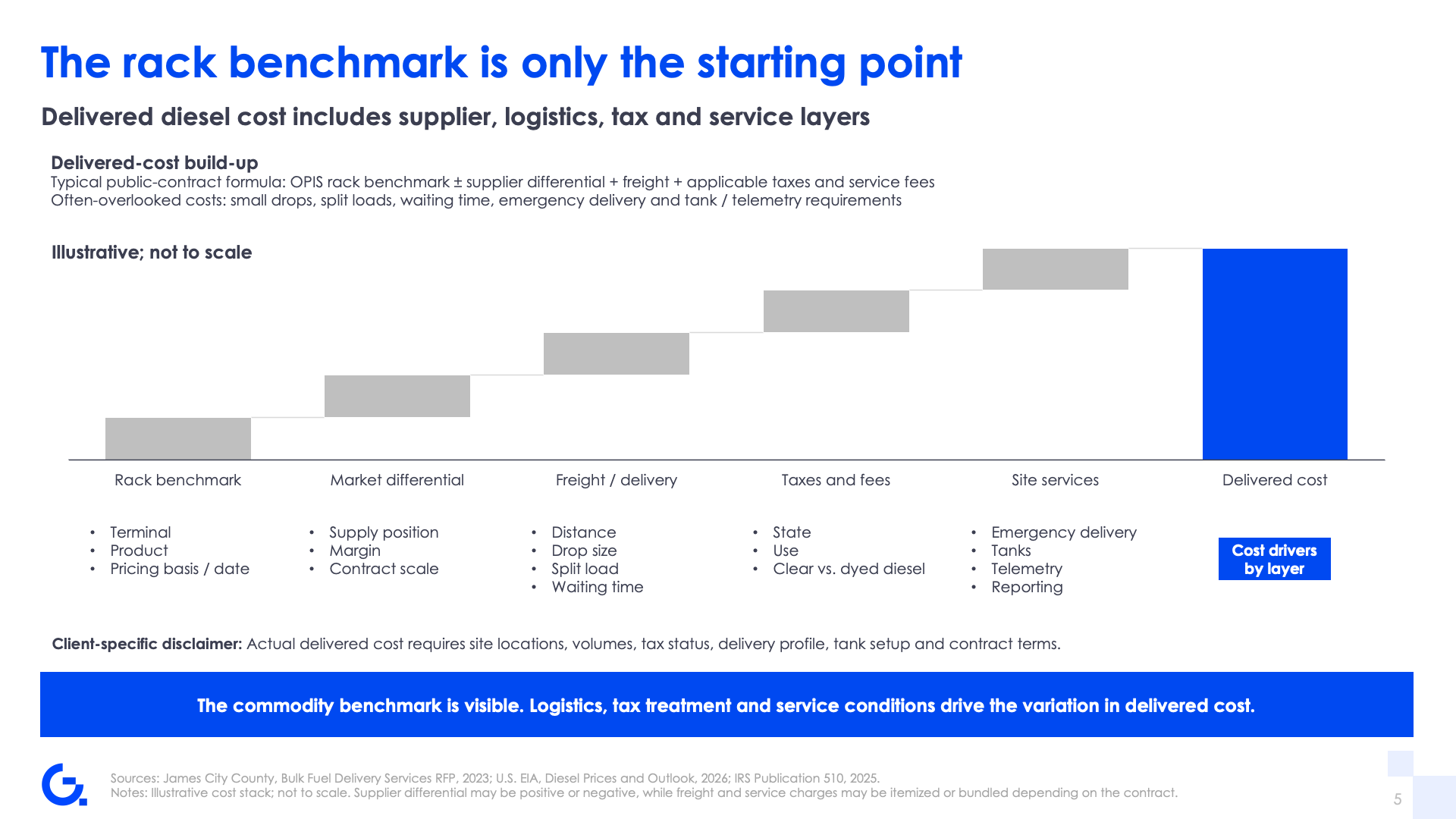
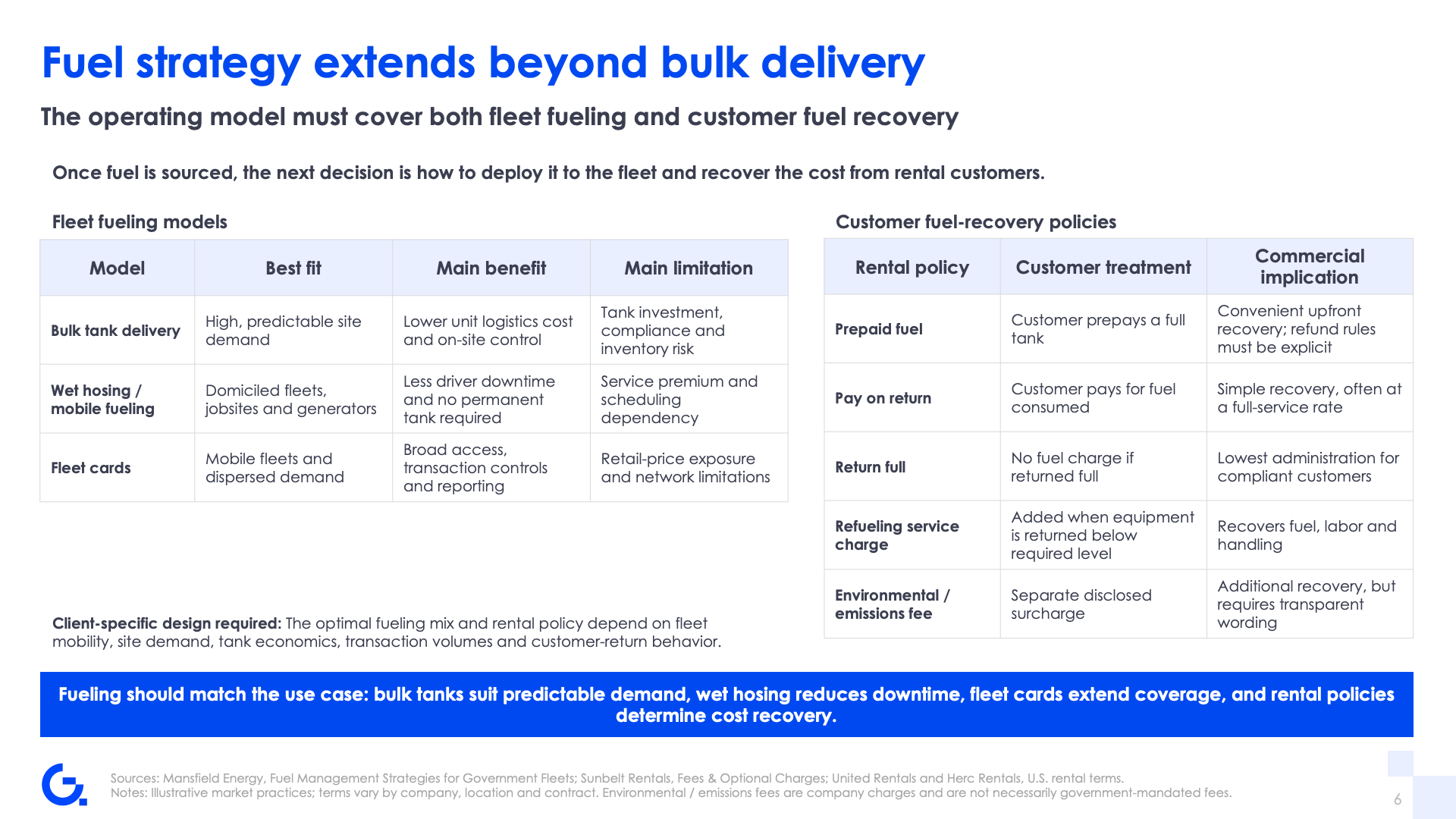
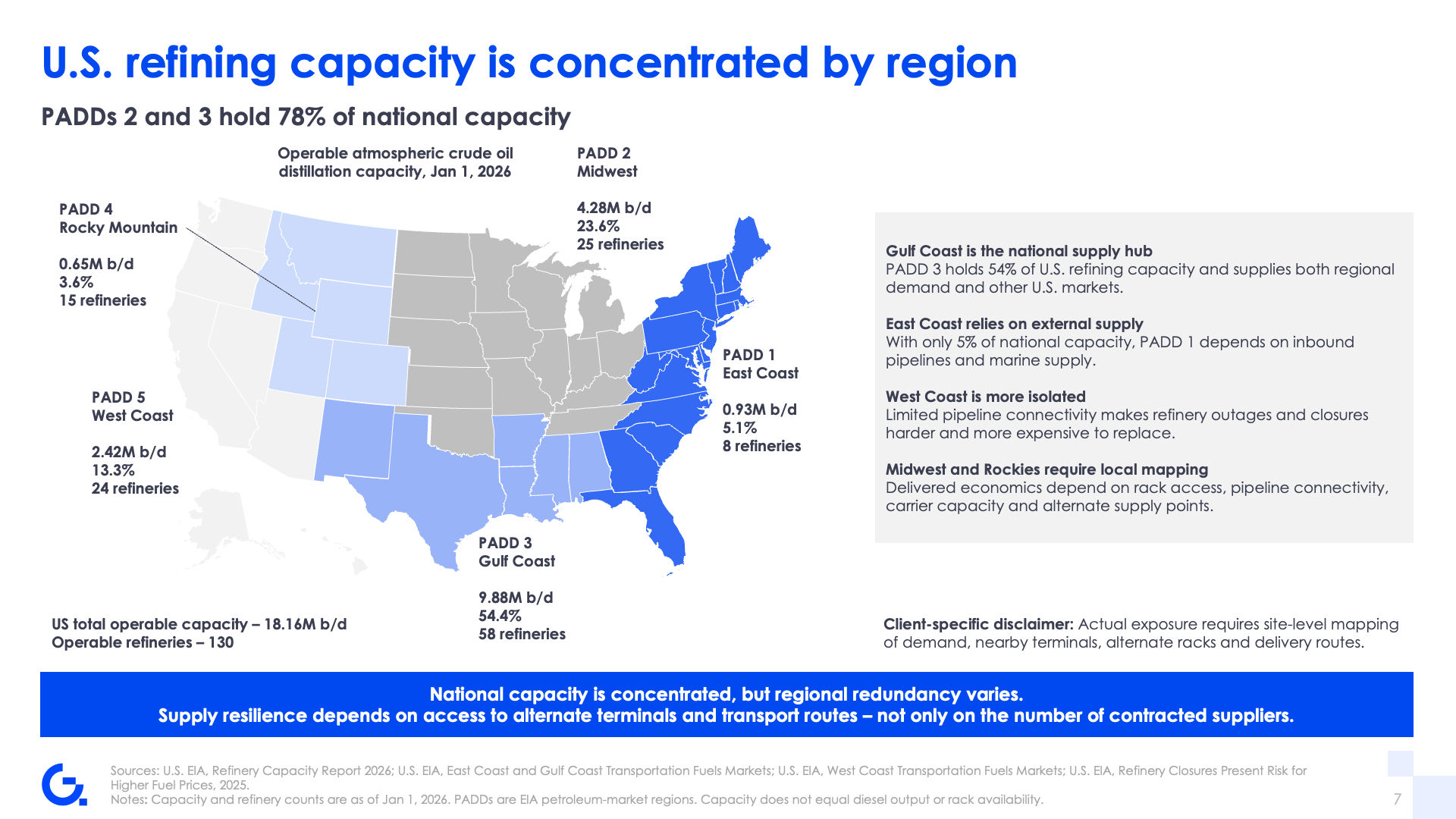
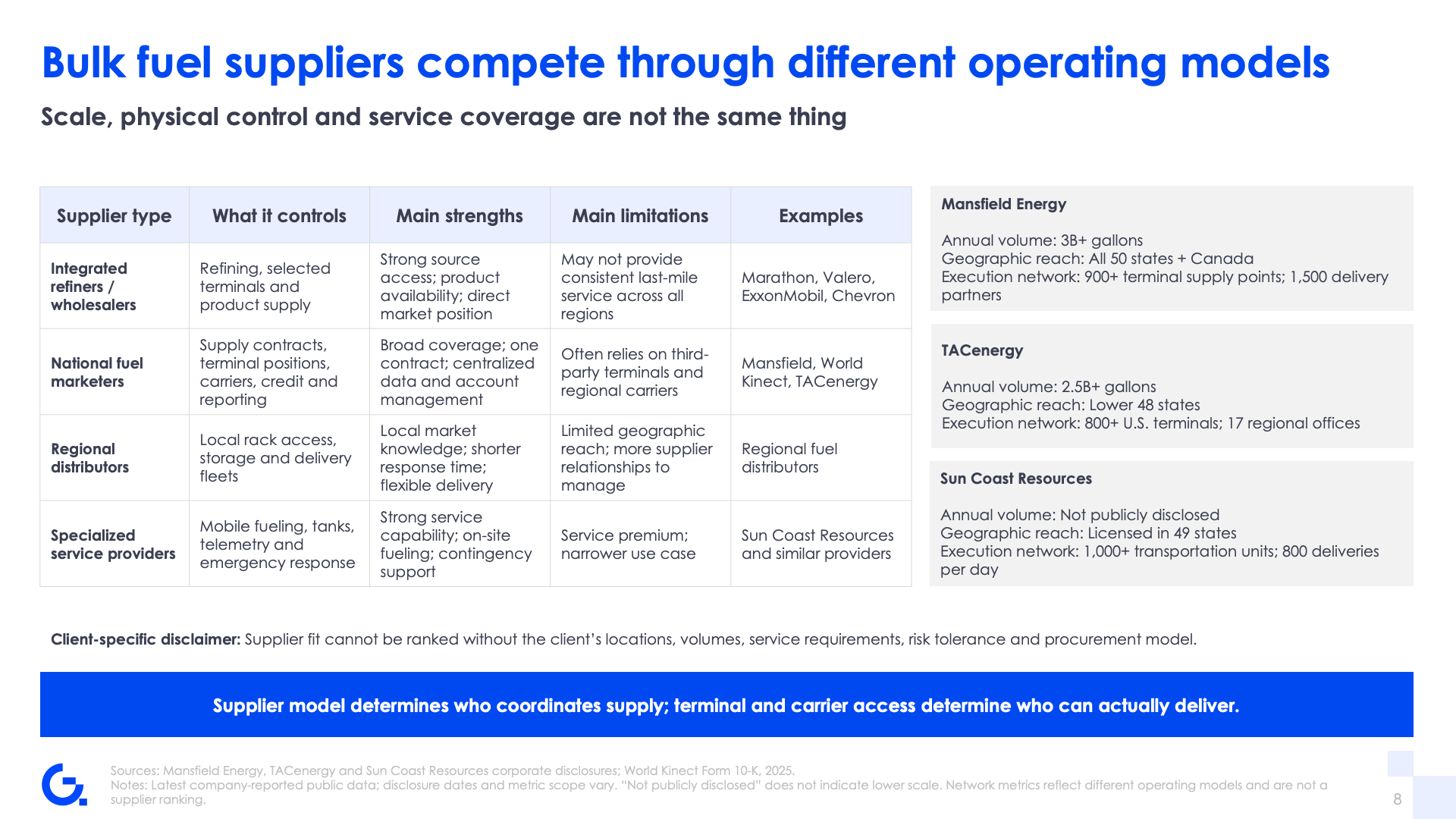
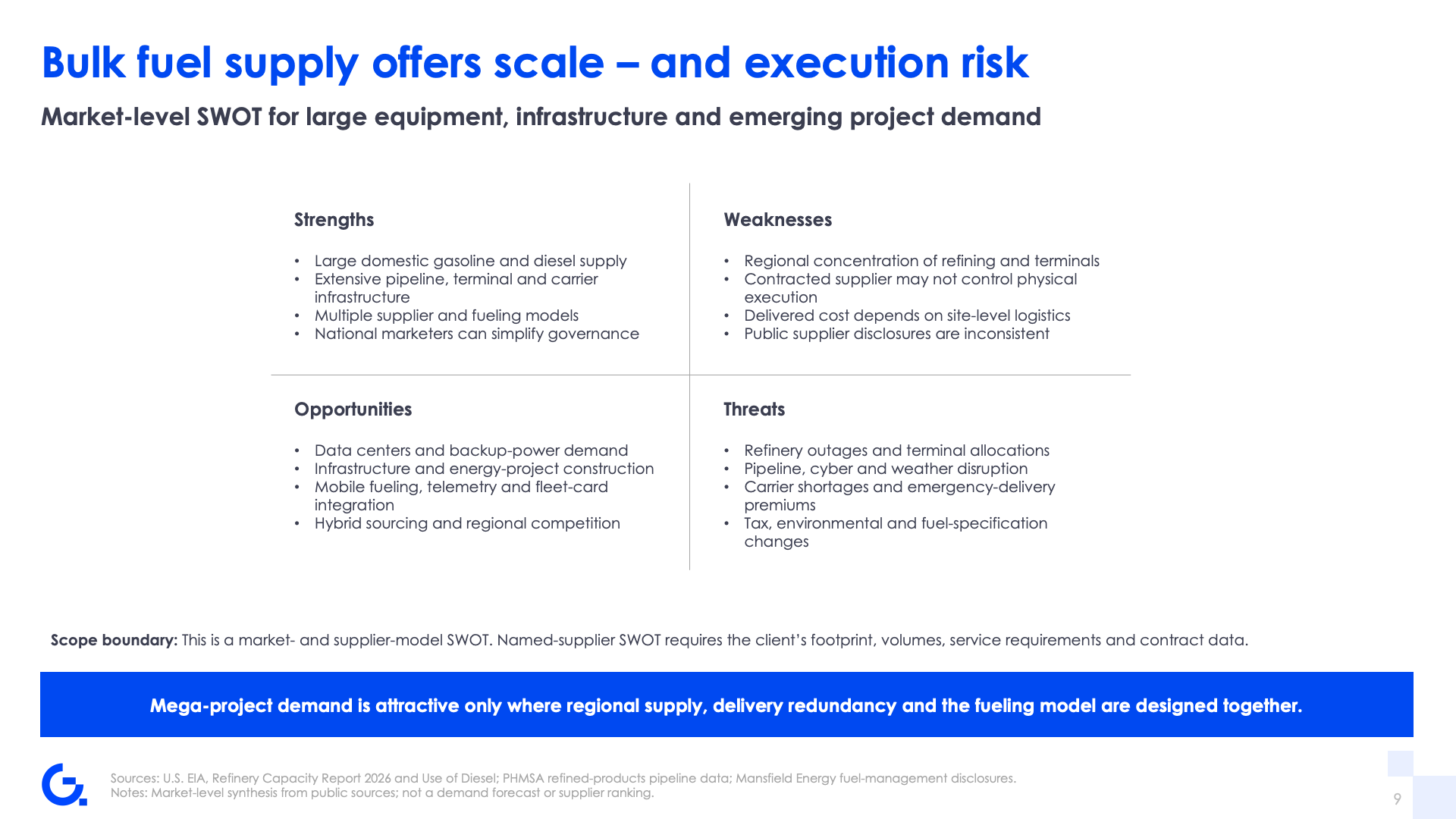
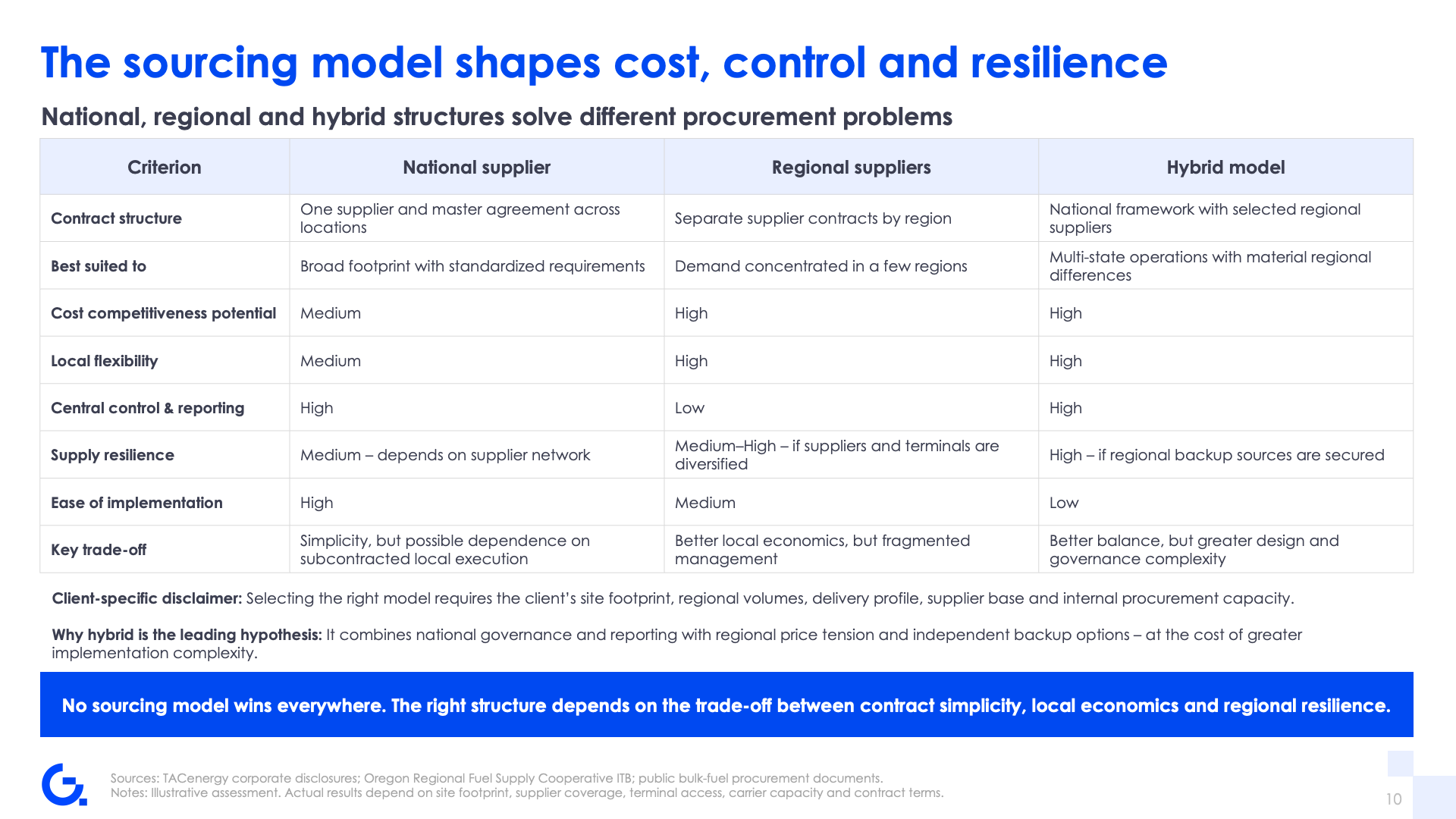
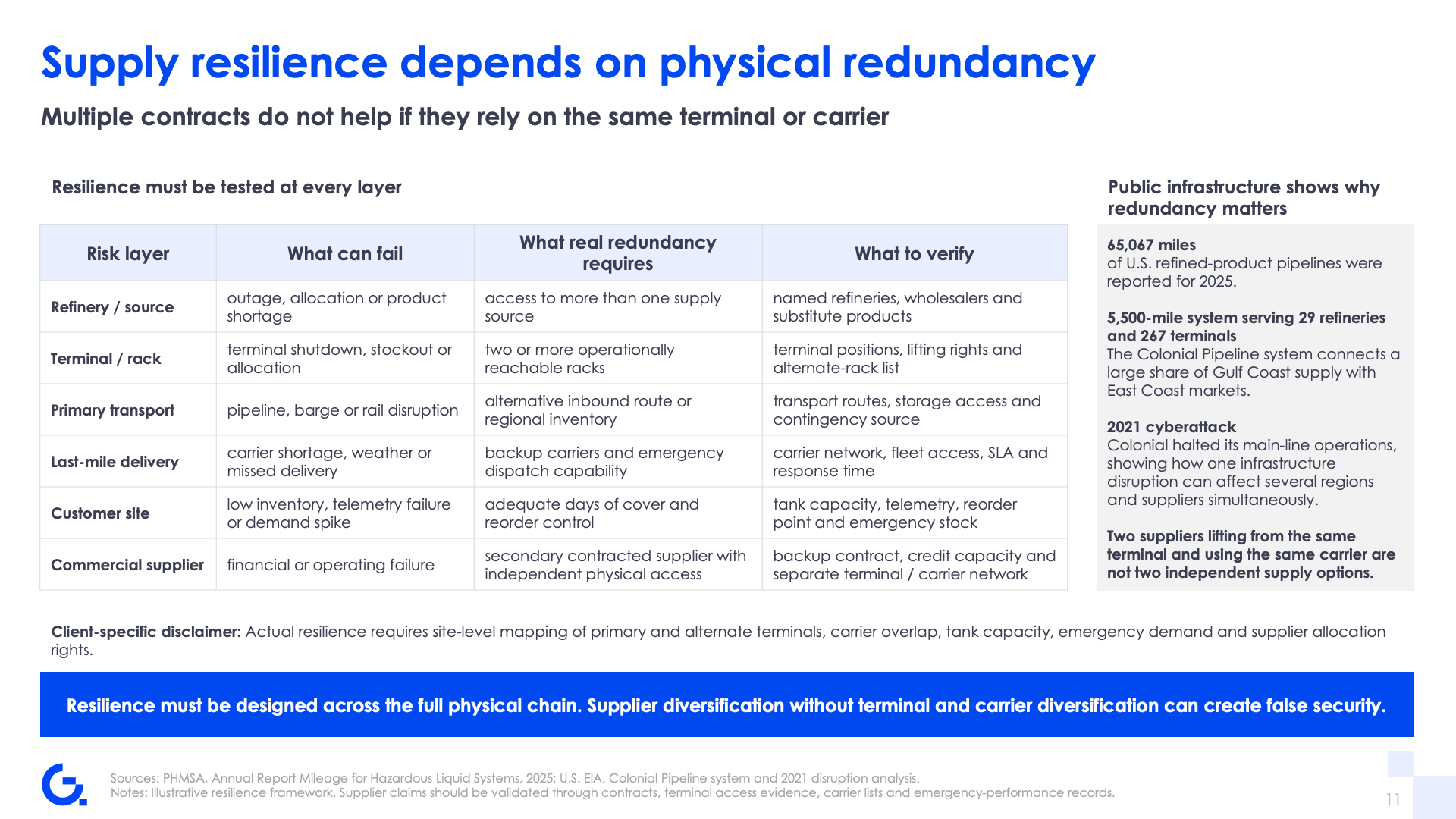
This case explores how large equipment and project operators can structure bulk fuel sourcing across a fragmented physical and commercial supply chain. Using public data, we mapped the U.S. fuel balance, refinery concentration, terminal and carrier dependencies, delivered-cost build-up, supplier operating models, fueling options and customer fuel-recovery practices. The analysis shows that national supply is ample, but site-level economics and continuity remain regional: two suppliers may still depend on the same terminal, carrier or pipeline. We therefore compared national, regional and hybrid sourcing structures and identified hybrid sourcing as the leading hypothesis for a distributed footprint, subject to client data. The result is a market baseline and resilience framework for developing site-level cost scenarios, supplier shortlists and an implementation roadmap.